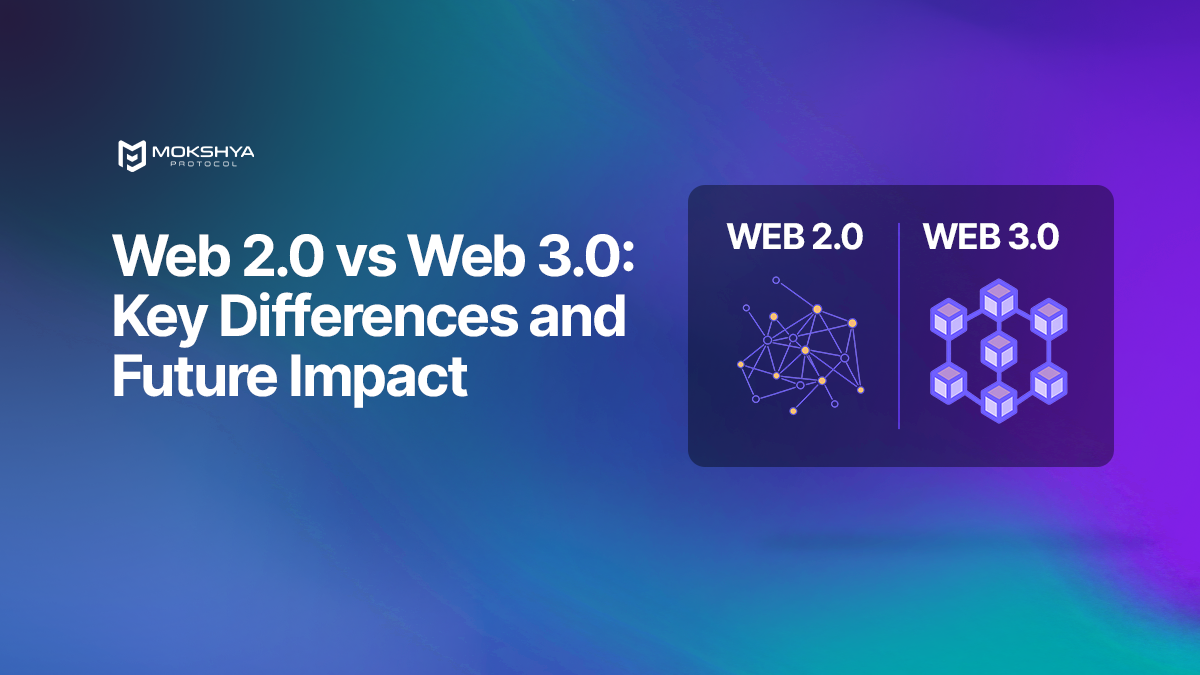
The internet has transformed dramatically over the last three decades. What started as a static network of pages in the 1990s has evolved into today’s highly interactive, app-driven ecosystem. But another transformation is already underway. The shift from Web 2.0 to Web 3.0 represents a leap not only in technology but also in how we perceive ownership, trust, and interaction online.
Understanding the Evolution of the Web
To understand why the debate around Web 2.0 vs Web 3.0 matters, it’s important to see the internet as a series of phases. Each phase, Web 1.0, Web 2.0, and Web 3.0, represents a major shift in how information is shared, how users interact, and who controls the data.
Web 1.0: The Read-Only Web
In the 1990s, the internet was static and informational. Websites were digital brochures, often created by companies or institutions, with little to no space for interaction. Users could only read content; they could not contribute or personalize their experience. This phase is often called the read-only web because it functions as a one-way channel of communication.
- Characteristics of Web 1.0:
- Static HTML pages
- Centralized servers
- Limited search capabilities
- Minimal interaction between users and publishers
Web 2.0 – The Participatory Web
The early 2000s marked a huge shift into Web 2.0, the version of the internet most of us grew up with. Web 2.0 emphasized participation, user-generated content, and collaboration. Social media platforms, blogging, wikis, and cloud-based applications are all products of Web 2.0.
- Characteristics of Web 2.0:
- Social interaction through platforms like Facebook, Twitter, and YouTube.
- User-generated content is driving engagement and growth.
- Cloud computing enables services such as Google Docs and Dropbox.
- Centralized companies are controlling and monetizing user data.
Web 3.0 – The Decentralized and Intelligent Web
We are entering the era of Web 3.0, also referred to as the Semantic Web or the Decentralized Web. Unlike its predecessors, Web 3.0 aims to build a smarter and more trustworthy digital environment. It is powered by blockchain, artificial intelligence, and decentralized protocols that prioritize ownership, privacy, and transparency.
- Characteristics of Web 3.0:
- Decentralization: Data is stored across distributed networks rather than on servers owned by tech giants.
- Blockchain Integration: Smart contracts, NFTs, and DeFi platforms operate without intermediaries.
- AI and Machine Learning: Systems can interpret and deliver personalized content with context.
- User Data Ownership: Individuals regain control over their personal data and digital identities
What are the differences between Web 2.0 and Web 3.0?
The difference between Web 2.0 and Web 3.0 is that Web 2.0 relies on centralized platforms that control data and monetization, while Web 3.0 is decentralized, powered by blockchain and AI, giving users ownership, privacy, and direct participation.
| Web 2.0 | Web 3.0 |
| Controlled by centralized platforms | Users own and control their data |
| Built on cloud computing and central servers | Powered by blockchain, AI, and the semantic web |
| Social sharing with limited user control | Decentralized participation and true ownership |
| Monetization through ads and platform profits | Token-based economies and direct monetization |
| Trust based on intermediaries and companies | Trust built on cryptography and smart contracts |
Real-World Examples of Web 2.0 and Web 3.0
Understanding the theory of Web 2.0 vs Web 3.0 is useful, but examples show how these technologies actually shape our digital lives. From social media to finance, the contrast becomes clear when we look at the platforms people use every day.
Popular Web 2.0 Platforms
Web 2.0 is the internet we know best. It dominates today’s digital landscape through platforms that thrive on centralized control and user participation.
- Facebook and Instagram: These social networks are quintessential Web 2.0 products. They allow billions of users to connect, share content, and interact, but the platforms fully control how data is stored and monetized.
- YouTube: User-generated videos turned into a global entertainment hub. While creators can earn revenue, YouTube holds the power to demonetize or remove content.
- Google Docs and Dropbox: Cloud applications make collaboration seamless, yet all documents and files are ultimately stored on centralized servers.
- Twitter (now X): A hub for real-time communication, but one where platform rules and algorithms dictate visibility and reach.
Conclusion
The journey from Web 2.0 to Web 3.0 marks a shift from participation to ownership. Web 2.0 gave us social media, cloud apps, and user-driven platforms, but it also centralized control and monetization. Web 3.0 changes this balance by introducing decentralization, transparency, and trustless systems that empower users to own and benefit from their digital contributions.
As the world moves into this new era, solutions like Mokshya AI are helping bridge the transition. By combining AI-driven insights with decentralized technologies, it enables individuals and businesses to harness the benefits of Web 3.0 more effectively. Exploring platforms like Mokshya.io ensures that users are not just participants in the digital economy but active stakeholders shaping its future.
Frequently Asked Questions
1. Is Web 3.0 replacing Web 2.0?
Web 3.0 is not a direct replacement but an evolution. Many Web 2.0 platforms are integrating Web 3.0 features like blockchain and NFTs, creating a hybrid internet experience during the transition.
2. What are some examples of Web 2.0 and Web 3.0 platforms?
Web 2.0 examples include Facebook, YouTube, and Google Docs. Web 3.0 examples include decentralized finance apps like Uniswap, NFT marketplaces such as OpenSea, and metaverse platforms like Decentraland.
3. Why is Web 3.0 called the Semantic Web?
It’s called the Semantic Web because it uses AI and machine learning to understand the meaning and context of information, enabling smarter and more personalized user experiences.
4. How does Web 3.0 benefit users financially?
Web 3.0 enables token-based economies, play-to-earn gaming, and NFT ownership, allowing users to directly earn, trade, and benefit from their contributions without intermediaries.
5. What challenges does Web 3.0 face?
Adoption challenges include the scalability of blockchains, complex user interfaces, regulatory uncertainty, and resistance from centralized platforms that dominate the current Web 2.0 landscape.
6. How can I get started with Web 3.0?
You can begin by exploring decentralized applications, creating a crypto wallet, or engaging with blockchain-based platforms. For businesses, solutions like Mokshya AI provide tools to integrate AI and decentralized technologies into digital strategies.