Introduction
In the rapidly evolving world of cryptocurrency, stablecoins have been a game changer, offering the stability so lacking in the otherwise volatile market. By pegging themselves to mainstream assets like fiat currencies, stablecoins serve as a connecting link between the conventional financial system and the world of digital assets. This piece plunges into the innermost aspects of the world of stablecoins, exploring their types, mechanism, benefits, drawbacks, and their pivotal role in the broader crypto universe.
What are Stablecoins?
Stablecoins are a class of cryptocurrency designed to maintain a stable price because they are collateralized against some kind of reserve asset, be it a fiat currency (e.g., USD), commodity (e.g., gold), or even another cryptocurrency. This stability makes them the ideal candidates for daily transactions, remittances, and as a store of value in the crypto ecosystem.
1. Fiat-Collateralized Stablecoins : These stablecoins are collateralized 1:1 by fiat currency held in reserve by a central authority. An equal amount of fiat currency is held in reserve for every stablecoin issued.
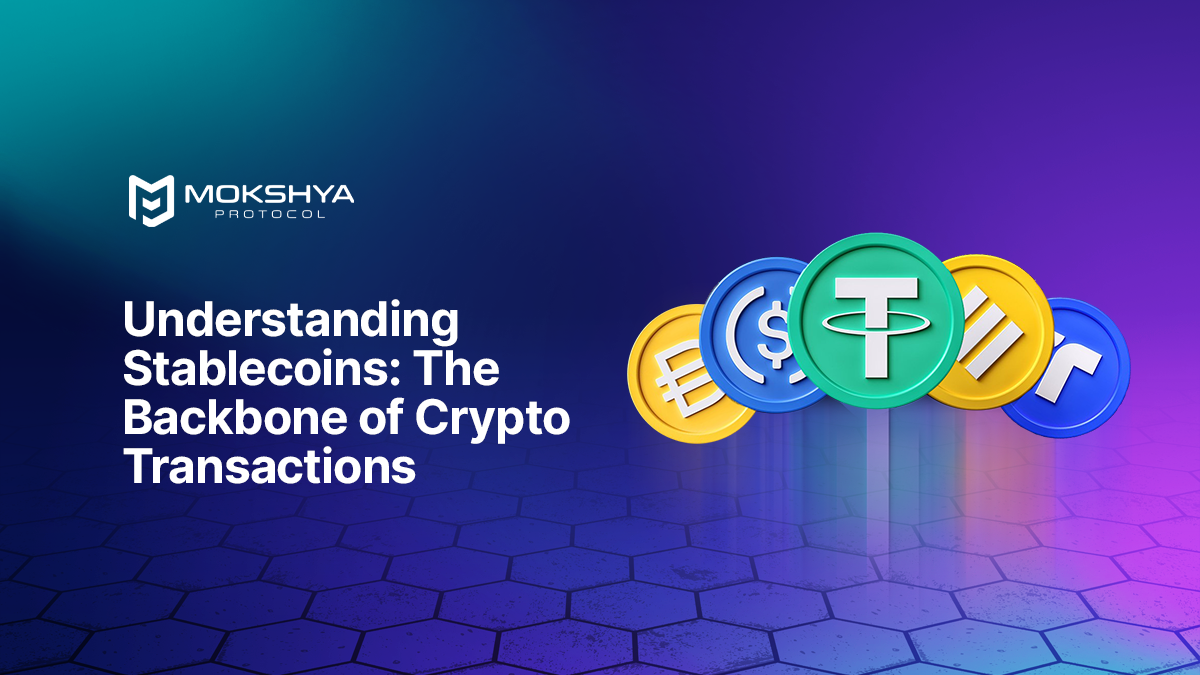
Examples: Tether (USDT): Most widely used stablecoin, pegged to the US dollar.
2. Crypto-Collateralized Stablecoins : These are collateralized by other cryptocurrencies, typically over-collateralized to account for the volatility of the backing asset.
Example: Dai (DAI), Backed by Ethereum and other cryptos, governed by the MakerDAO protocol.
3. Algorithmic Stablecoins : Instead of being backed by assets, these are algorithmically and smart contract-based, which control the supply of the stablecoin to maintain its peg.
Example: Ampleforth (AMPL), Its supply adjusts based on demand to stabilize its price.
4. Commodity-Collateralized Stablecoins : They are backed by commodities like gold or oil.
Example: Paxos Gold (PAXG): Each token is collateralized with an ounce of fine troy gold.
How Stablecoins Work
The principal goal of stablecoins is to combine the benefits of cryptocurrencies. such as transaction speed and decentralization with the stability of traditional fiat currencies.
Issuance and Redemption: Stablecoins can be purchased by delivering the value equivalent of the backing asset. Alternatively, they can be redeemed for the underlying asset.
Maintaining the Peg: Mechanisms vary, fiat-collateralized stablecoins tap reserves, crypto-collateralized stablecoins employ over-collateralization and smart contracts, while algorithmic stablecoins vary supply according to market demand.
Price Stability: Offer a refuge from the volatility of other cryptocurrencies.
Efficient Transactions: Enable faster and cheaper cross-border transactions compared to traditional banking systems.
Financial Inclusion: Open up access to financial services for the unbanked or underbanked.
Integration with DeFi: As a fundamental building block within decentralized finance platforms, enabling lending, borrowing, and yield farming.
Risks and Challenges
Centralization: Fiat-backed stablecoins are likely to be premised on a central entity, and this can be a point of failure.
Regulatory Uncertainty: Evolving regulatory frameworks may impact the issuance and use of stablecoins.
Collateral Risks: For crypto-collateralized stablecoins, a dramatic fall in the value of the collateral asset may undermine the stability.
Algorithmic Failures: Algorithmic stablecoins can fail to maintain their peg during times of abnormal stress in the market, and this has been seen with the TerraUSD (UST) implosion in 2022.
Stablecoins in the Real World
Stablecoins are increasingly being utilized in real-life scenarios outside of the crypto world:
Remittances: Offer a faster and cheaper means of transferring funds across borders.
E-commerce: Stablecoins are accepted by some retailers, offering an alternative payment option.
Payroll: Companies, especially those in the crypto sector, use stablecoins to compensate employees.
Savings: In inflationary economies, stablecoins offer a method to preserve value.
Regulatory Landscape
Stablecoins are under close scrutiny from governments and regulators:
United States: The recent signing of the GENIUS Act imposes a regulatory framework on stablecoins, requiring issuers to maintain adequate reserves and provide regular audits.
European Union: The Markets in Crypto-Assets (MiCA) regulation attempts to introduce a comprehensive regulatory framework for digital assets, including stablecoins.
Asia: Singapore and Japan are developing guidelines to introduce stablecoins into their financial systems safely.
Future Outlook Stablecoin function will rise:
Central Bank Digital Currencies (CBDCs): CBDCs, which are backed by governments, could exist alongside stablecoins or become their replacement.
Traditional Finance Integration: Financial institutions and banks are beginning to explore stablecoin usage in settlement and clearing.
Technological Advancements: Blockchain technology advancements will enhance the scalability and efficiency of stablecoins.
Conclusion
Stablecoins have entrenched their position as the backbone of the cryptocurrency universe, providing the stability necessary for expanded use and introduction into traditional financial systems. As everything continues to evolve, it is crucial to understand the functions of stablecoins, pros, and cons for any individual involved in the digital asset space.